Three years into my career, I was stuck. I had the qualifications, I had the work ethic, and I genuinely believed in the value of what I was doing, but I was invisible to the people and opportunities that could have taken my professional life to the next level. I applied to job postings and heard nothing. I sent cold emails and received no replies. I attended one industry conference, stood awkwardly near the refreshments table for two hours, exchanged zero business cards, and left feeling more discouraged than when I arrived.
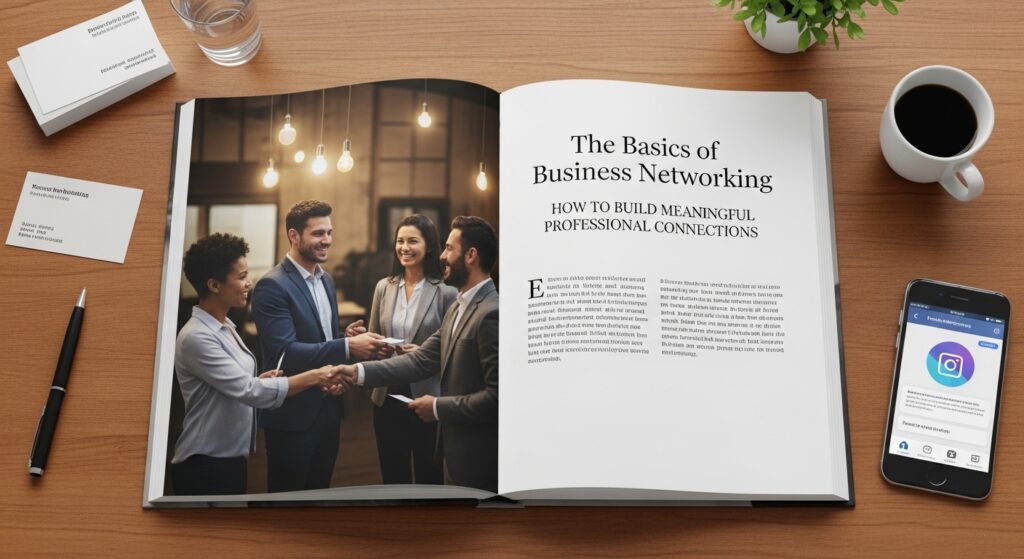
Then a mentor gave me advice that permanently changed how I approached my career. She said: “Stop trying to network. Start trying to be genuinely useful to people you respect. Everything else follows from that.”
That one shift in perspective transformed networking from an uncomfortable, transactional chore into one of the most natural and rewarding parts of my professional life. Within a year of applying that principle consistently, I had built relationships that led to new opportunities, invaluable mentorships, trusted collaborators, and a professional reputation that opened doors I had not even known existed.
Business networking is one of the most consistently misunderstood and underutilized skills in professional life. Most people either avoid it entirely because it feels awkward and artificial, or they approach it transactionally and wonder why it never seems to produce meaningful results.
In this guide, you will learn exactly what effective business networking looks like in 2026, why it matters more than ever in a digitally connected world, and the specific strategies and habits that turn networking from an uncomfortable obligation into a genuine competitive advantage for your career and your business. Whether you are a complete beginner or someone who has tried networking before without success, this guide will give you a practical foundation to build on.
What Business Networking Actually Is, And What It Is Not
Before we explore how to network effectively, it is worth clarifying what genuine business networking actually means, because the popular misconception of what it is tends to be precisely what makes most people so reluctant to try it.
Business networking is not collecting as many business cards or LinkedIn connections as possible. It is not attending events with the sole intention of finding someone who can do something for you. It is not performing a version of yourself designed to impress strangers. And it is absolutely not a numbers game where more contacts automatically equals more opportunity.
Business networking is the deliberate practice of building and nurturing genuine, mutually beneficial professional relationships over time. It is the ongoing investment in human connections that create trust, open communication, and a foundation of goodwill from which opportunities, expected and unexpected, naturally emerge.
The distinction matters enormously because it changes everything about how you approach every networking interaction. When your goal is to collect contacts, every conversation feels like a transaction. When your goal is to build genuine relationships, every conversation becomes an opportunity to connect with another human being in a meaningful way, and that shift in energy is immediately felt by the people you interact with.
Research consistently confirms what most experienced professionals already know intuitively: the majority of significant career opportunities, new jobs, important clients, game-changing collaborations, and transformative mentorships, come not through formal application processes but through personal and professional relationships. Your network is quite literally one of your most valuable career assets, and like all valuable assets, it requires consistent investment to grow.
Why Business Networking Matters More Than Ever in 2026
In an age of LinkedIn, remote work, global connectivity, and AI-powered job matching platforms, one might assume that the importance of personal professional relationships has diminished. The reality is precisely the opposite.
The sheer volume of digital noise in 2026, the endless stream of cold emails, automated LinkedIn connection requests, AI-generated outreach messages, and algorithmic content feeds, has made genuine human connection rarer and therefore more valuable than it has ever been. In a world where most professional communication is automated and impersonal, a real relationship built on genuine mutual respect and authentic interaction stands out dramatically.
The professionals and business owners who consistently rise to the top of their fields in 2026 are not necessarily the most technically skilled or the most formally qualified. They are the ones who have built deep networks of trusted relationships, people who recommend them for opportunities, vouch for their character and competence, collaborate with them on important projects, and keep them informed about developments that their competitors never hear about until it is too late.
For small business owners specifically, a strong professional network is often the difference between a business that struggles in isolation and a business that grows through referrals, partnerships, shared resources, and collective knowledge. (For more on building your business’s digital presence alongside your professional network, check out our guide on [7 Essential Digital Marketing Skills Every Small Business Owner Needs].)
Step 1 — Define Your Networking Goals Before You Start
One of the most common reasons people find networking unproductive is that they approach it without any clear sense of what they are actually trying to achieve. Wandering into networking activities without defined goals is the professional equivalent of going grocery shopping without a list, you end up with a lot of random items and none of what you actually needed.
Identify What You Are Looking For
Before you attend an event, optimize your LinkedIn profile, or reach out to a new contact, take the time to articulate clearly what you want your professional network to help you accomplish. Your networking goals might include finding a mentor in your industry, identifying potential clients or business partners, staying informed about trends and developments in your field, discovering job opportunities before they are publicly advertised, or building your reputation as an expert in a specific area.
Different goals require different networking strategies and different types of relationships. Someone building a client base for a freelance business needs a different approach than someone seeking a corporate mentorship or an entrepreneur looking for co-founders. Clarity about your goals allows you to focus your networking energy where it will be most productive.
Map Your Existing Network
Most people dramatically underestimate the strength and scope of the professional network they already have. Before looking outward for new connections, take a thorough inventory of your existing relationships, former colleagues, classmates, professors, clients, suppliers, neighbors with professional expertise, and anyone else with whom you have a genuine existing connection.
These warm relationships are almost always more valuable starting points than cold outreach to strangers, because the foundation of trust already exists. Reconnecting with dormant professional relationships, people you have not spoken to in months or years, is often one of the quickest ways to generate new professional opportunities, because the groundwork has already been laid.
Step 2 — Master the Art of Genuine Conversation
The heart of effective networking is not strategy or tactics, it is the quality of the human conversations you are capable of having. Every lasting professional relationship begins with a single conversation, and the ability to have genuinely engaging, memorable, and mutually enjoyable conversations is therefore the most foundational networking skill you can develop.
The Listening Advantage
The most universally admired conversationalists in any professional setting share one striking characteristic, they are exceptional listeners. Not passive listeners who are simply waiting for their turn to speak, but active, genuinely curious listeners who ask thoughtful follow-up questions, reflect back what they have heard, and make the person they are speaking with feel genuinely interesting and valued.
In networking settings where most people are focused on talking about themselves and what they have to offer, the person who asks insightful questions and listens intently to the answers is immediately memorable. People do not remember the person who told them the most impressive things about themselves. They remember the person who made them feel most heard.
The Art of the Thoughtful Question
Prepare a handful of genuinely interesting conversation-starting questions before attending any professional event. Move beyond the generic “So, what do you do?” opener that everyone uses, and instead ask questions that invite more meaningful responses.
Questions like “What is the most interesting challenge you are working on right now?”, “What brought you into this particular field?”, or “What has surprised you most about this industry recently?” open doors to real conversations that are far more memorable and relationship-building than the standard professional small talk that most networking events are filled with.
Following the Platinum Rule
Most people are familiar with the Golden Rule — treat others the way you want to be treated. In networking, the more powerful principle is the Platinum Rule — treat others the way they want to be treated. This means paying close attention to the communication style, pace, and preferences of the person you are speaking with and adapting your approach accordingly, rather than defaulting to whatever feels most natural to you.
Some people love energetic, ideas-focused conversations. Others prefer methodical, detail-oriented discussions. Some appreciate directness and brevity. Others value warmth and relationship-building before getting to business. Reading these preferences accurately and adjusting your communication style to match them is a skill that dramatically improves the quality and depth of every professional relationship you build.
Step 3 — Build a Strategic Presence on LinkedIn
In 2026, LinkedIn is the single most important digital platform for professional networking, and for most people, their LinkedIn profile is the first thing a new professional contact will look at after meeting them. A poorly maintained or incomplete LinkedIn profile immediately undermines the impression you worked to create in a face-to-face or virtual interaction.
Optimizing Your LinkedIn Profile for Networking
Your LinkedIn profile should function as a compelling professional narrative, not simply an online version of your resume. Every section should be deliberately crafted to communicate not just what you have done, but who you are, what you stand for, and what value you bring to the people and organizations you work with.
Your headline, the line of text that appears directly below your name, is the most visible and most important element of your profile. Instead of simply listing your job title, use this space to communicate your unique value proposition in plain language. “Helping small businesses grow through digital marketing strategy” is far more compelling and memorable than “Marketing Manager at XYZ Company.”
Your About section should tell your professional story in a warm, authentic, first-person voice. Explain what drives you professionally, what you are most proud of having accomplished, and what kind of professional relationships and opportunities you are looking to build. This is the section where your personality and genuine professional identity should come through most clearly.
Creating and Sharing Valuable Content on LinkedIn
The professionals who build the strongest and most rapidly growing LinkedIn networks are not simply those with the most impressive credentials. They are the ones who consistently share genuinely valuable content, insights, lessons learned, industry observations, practical advice, and authentic professional stories, that makes their connections glad to have them in their network.
You do not need to be a professional writer or have decades of experience to share valuable content on LinkedIn. A brief post reflecting on a lesson you learned from a recent professional challenge, a practical tip from your area of expertise, or a thoughtful response to a trend in your industry can generate significant engagement and attract meaningful new connections from people who share your professional interests and values.
Step 4 — Show Up Consistently at Industry Events and Communities
Digital networking is powerful, but face-to-face and community-based networking remains irreplaceable for building the depth of relationship that truly transforms professional trajectories. There is a quality of trust, rapport, and human connection that develops in person, or even in live virtual settings, that asynchronous digital communication simply cannot replicate.
Making the Most of Professional Events
Whether you are attending a local business chamber meeting, an industry conference, a professional association gathering, or a virtual networking event, the difference between walking away with valuable new connections and walking away with a stack of business cards you will never follow up on comes down to intention and preparation.
Before any networking event, research the attendees or speakers if the information is available and identify two or three specific people you would genuinely like to connect with and why. Having a clear intention transforms a large, potentially overwhelming event into a focused mission with specific, achievable goals.
Arrive early whenever possible. The beginning of events, before the formal program starts, is consistently the best time for genuine one-on-one conversations, because people have not yet formed the conversational clusters that become harder to enter as the event progresses.
Give yourself permission to have fewer, deeper conversations rather than rushing to meet as many people as possible. One genuinely memorable conversation with a person who becomes a lasting professional connection is worth infinitely more than twenty superficial card exchanges that neither party will remember by the following morning.
Finding and Joining Your Professional Community
Beyond formal events, some of the richest networking opportunities exist within ongoing professional communities — industry associations, mastermind groups, professional development cohorts, online communities, and special interest groups where people with shared professional interests gather regularly over an extended period of time.
The advantage of community-based networking over event-based networking is the cumulative depth of relationship that develops through repeated interaction over time. When you show up consistently in the same professional community, contributing value, engaging thoughtfully, supporting others, you build the kind of reputation and trust that creates opportunities organically, without ever having to make a deliberate sales pitch.
Step 5 — Follow Up With Intention and Consistency
Here is an uncomfortable truth about networking that most guides gloss over: the vast majority of potentially valuable professional connections are lost not because the initial interaction went poorly, but because nobody followed up.
Meeting someone interesting at a professional event and then never making contact again is the networking equivalent of planting a seed and never watering it. The potential was there, but without follow-through, nothing grows.
The 24-Hour Follow-Up Rule
Make it a personal rule to follow up with every meaningful new professional contact within 24 hours of your initial meeting. This follow-up does not need to be elaborate or time-consuming. A brief, personalized message, referencing something specific from your conversation to demonstrate that you were genuinely paying attention, is all that is required.
A simple follow-up message might read: “It was genuinely great meeting you at the conference yesterday. Your perspective on the shift toward AI-driven customer service was something I have been thinking about since our conversation. I would love to stay connected and continue the discussion, I have sent you a LinkedIn connection request.”
This kind of specific, personal follow-up immediately distinguishes you from the dozens of generic connection requests that most professionals receive and ignore every week. It signals that you valued the interaction, that you were genuinely listening, and that you are the kind of professional who follows through, all of which are qualities that make people want to invest further in a relationship with you.
Nurturing Relationships Over the Long Term
The most valuable professional relationships are not built in a single impressive interaction, they are built through consistent, low-pressure contact maintained over months and years. The professionals with the strongest networks are not necessarily the most charismatic or the most aggressive networkers. They are the most consistently thoughtful ones.
Develop a habit of staying in regular contact with your most important professional relationships in ways that provide value without making demands. Share an article you think they would find genuinely interesting. Congratulate them on a professional achievement you noticed. Introduce them to someone in your network who could be useful to them. Remember details from previous conversations and follow up on them in future interactions.
These small, consistent gestures of genuine interest and generosity compound over time into relationships of remarkable depth and loyalty, the kind that produce the most valuable professional opportunities precisely because they are rooted in real trust rather than transactional calculation.
Step 6 — Develop a Reputation for Adding Value First
The most powerful networking principle of all, the one that my mentor articulated so simply and that changed everything for me, is the principle of leading with generosity.
The professionals who build the most influential and genuinely valuable networks are not the ones who are most skilled at asking for help. They are the ones who are most skilled at offering it. They share knowledge freely. They make introductions that benefit both parties without expecting anything in return. They provide feedback, support, and resources to people in their network long before any reciprocal opportunity arises.
This approach works so powerfully for one simple reason: reciprocity is one of the most deeply ingrained principles of human social behavior. When someone helps us genuinely and without an obvious agenda, we feel a natural and powerful inclination to help them in return, often going out of our way to do so when the opportunity arises.
Practical Ways to Add Value to Your Network
Adding value to your professional network does not require grand gestures or significant time investments. Some of the most appreciated and most remembered acts of professional generosity are remarkably simple:
Making a thoughtful introduction between two people in your network who would genuinely benefit from knowing each other costs you nothing and creates goodwill with both parties simultaneously. Sharing a job opportunity, a useful resource, or a relevant piece of industry news with someone you know would benefit from it takes two minutes and demonstrates that you are thinking of them. Offering genuine, specific praise or encouragement for someone’s professional work, publicly on LinkedIn or privately in a message, costs nothing and means more than most people realize.
When you build a consistent reputation as someone who adds value, asks for nothing in return, and genuinely invests in the success of the people around them, opportunities begin to flow toward you with a naturalness and abundance that no amount of strategic networking maneuvering can manufacture.
Common Business Networking Mistakes to Avoid
Even well-intentioned professionals consistently undermine their networking efforts through these avoidable mistakes:
- Treating networking as a one-time activity: Networking is not something you do when you need a job or a client and stop doing when things are going well. The professionals with the strongest networks build them continuously, during the good times as well as the challenging ones, so that the relationships are deep and genuine when they are needed most.
- Talking about yourself too much: The most common mistake in networking conversations is spending the majority of the interaction talking about your own achievements, goals, and needs. Flip the ratio. Ask more than you tell. Listen more than you speak. The person who leaves a conversation feeling genuinely heard will always remember you more fondly than the person who delivered the most impressive monologue.
- Neglecting your existing network in pursuit of new contacts: The relationships you already have are almost always more valuable than the new ones you are chasing. Invest regularly in maintaining and deepening your existing professional relationships before focusing your energy on expanding to new ones.
- Only networking within your own industry: Some of the most valuable professional relationships and unexpected opportunities come from connections outside your immediate industry. Diverse networks expose you to different perspectives, different skill sets, and different markets that can create opportunities you would never have encountered staying exclusively within your own professional bubble.
- Making your follow-up all about you: Following up after a networking interaction with an immediate request for a favor, a referral, or a business opportunity destroys the goodwill of the initial meeting instantly. Follow up to express genuine appreciation and interest. Save any requests for after a relationship of genuine mutual trust has been established.
- Underestimating the power of online communities: Some professionals dismiss online networking as less valuable than in-person interaction. In 2026, vibrant professional communities on LinkedIn, Slack, Discord, and industry-specific platforms are generating real, valuable, and lasting professional relationships every single day. Do not overlook them.
Conclusion and Final Thoughts
Business networking, at its finest, is not a professional strategy. It is a human practice, the deliberate cultivation of genuine relationships built on mutual respect, authentic interest, and the generous sharing of knowledge, opportunity, and support.
The six steps covered in this guide — defining your goals, mastering genuine conversation, building a strategic LinkedIn presence, showing up consistently in professional communities, following up with intention, and leading with generosity — form a complete and practical framework for building the kind of professional network that genuinely transforms careers and businesses over time.
The awkward young professional who stood by the refreshments table at that industry conference years ago, wishing desperately that networking came more naturally, eventually learned that it was never supposed to be about performing or impressing or collecting. It was always about connectingm, one genuine, curious, generous human interaction at a time.
That shift is available to you too. And it starts with the very next professional conversation you choose to approach with genuine interest in the person in front of you rather than what they might be able to do for you.
What has been your biggest challenge with professional networking, and what strategy has worked best for you? Share your experience in the comments below. Your insight might be exactly the breakthrough another reader needs to finally start building the professional connections that will change their career.